
Roof replacement
Residential roof replacement
Compare the proposed roof system, included work, homeowner responsibilities and how hidden damage will be authorized in writing.
Prepare for an estimate
What belongs in the written scope
A useful roof replacement proposal for a Garner-area home should describe removal of the existing covering, inspection of the exposed deck, treatment of damaged sections, underlayment, flashings, the new roof covering, ventilation details, site protection, cleanup and disposal. Ask which product names and thicknesses are specified, which existing flashings will be replaced rather than reused and who supplies dumpsters and ground protection. Require a clear statement of exclusions. Most important, ask how concealed damage changes the price and who must authorize that work before it begins. Verbal assurances are not a scope. If insurance may be involved, North Carolina Department of Insurance consumer pages advise contacting your insurer, documenting damage with photos and avoiding permanent repairs until the company has inspected and you have agreed on repair costs.
Area information
- Roof replacement in Garner, North Carolina
- Roof replacement in Knightdale, North Carolina
- Roof replacement in Clayton, North Carolina
- Roof replacement in Raleigh, North Carolina
- Roof replacement in Fuquay-Varina, North Carolina
- Roof replacement in Holly Springs, North Carolina
- Roof replacement in Cary, North Carolina
- Roof replacement in Apex, North Carolina
- Roof replacement in Morrisville, North Carolina
- Roof replacement in Wendell, North Carolina
- Roof replacement in Rolesville, North Carolina
- Roof replacement in Smithfield, North Carolina
- Roof replacement in Zebulon, North Carolina
- Roof replacement in Wake Forest, North Carolina
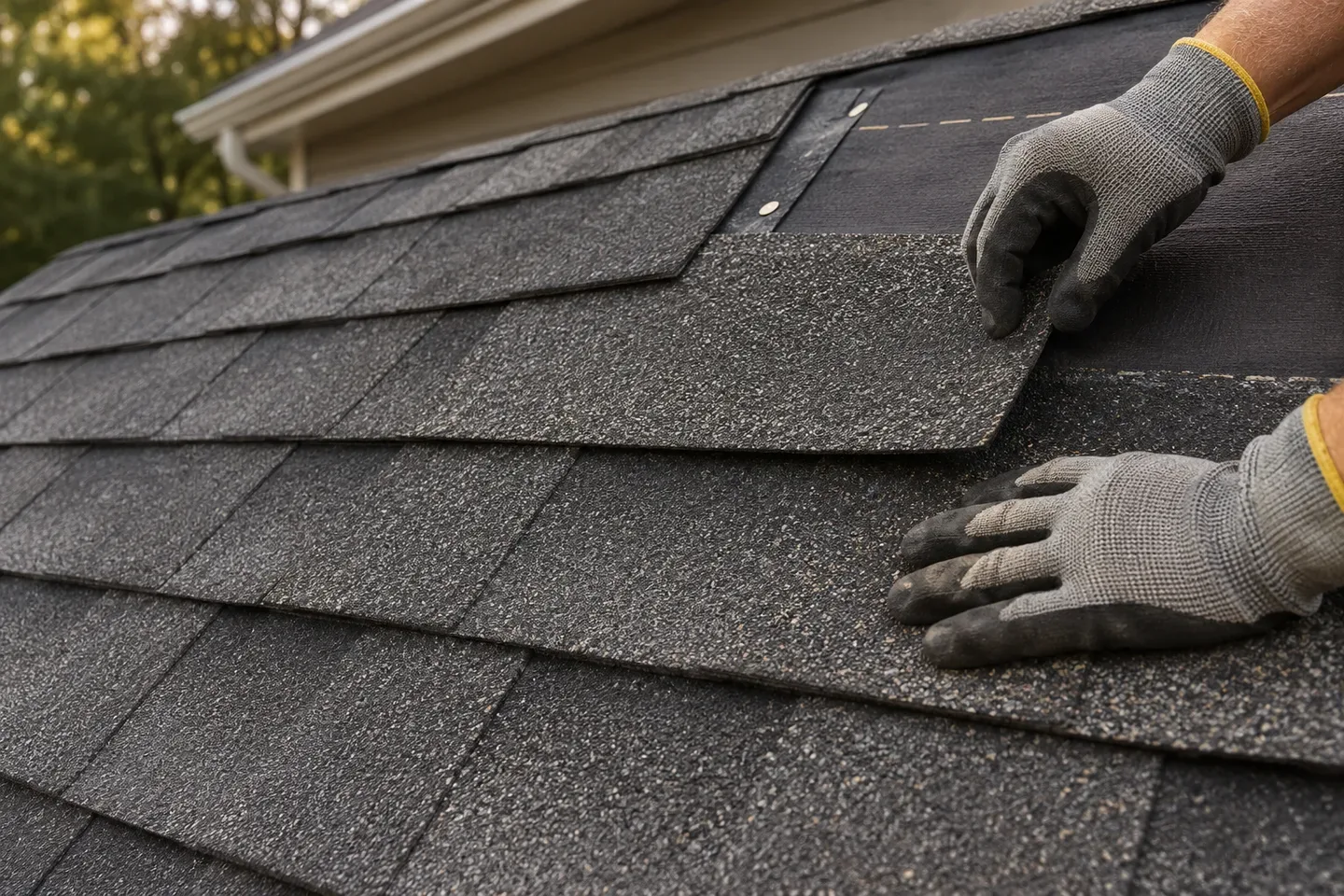
AI-generated illustration; not our crew or a completed local project.
Work items to confirm in writing
Use these cards as a comparison checklist across independent proposals. They list common work lines homeowners forget to match. They do not mean this publication performs, schedules or prices the work.
Removal and inspection
Confirm how many layers will be torn off, whether the tear-off is full or partial, how the exposed deck will be inspected and how soft or wet sections will be marked for your review before those boards are replaced and billed.
Decking and underlayment
Ask for the underlayment product specified with the covering system, any ice and water protection at eaves or valleys if proposed and unit pricing on decking replacement. Require written approval before paid decking work exceeds any allowance.
Flashings and covering
Identify the covering product, color and fastening method, plus which step flashings, drip edge, wall flashings, chimney details and pipe boots are new. Ask who decides if an unexpected intersection needs a different metal detail and how that change is priced.
Ventilation, protection and cleanup
Ask what attic ventilation work is included, how intake and exhaust vents are handled if the attic remains vented, how the yard and equipment will be protected, who hauls debris and which cleanup remains your responsibility. Ask the contractor to explain moisture and ventilation observations for the actual roof rather than treating a generic vent recommendation as a design.
Understand cost factors before comparing totals
Roof size, pitch, access, material choice, tear-off layers and the condition discovered beneath the covering can change proposals. Ask each bidder to describe access, tree-clearance and staging assumptions for the actual property. This guide supplies no personalized quote, financing offer or universal price. Compare like-for-like scopes and demand exclusions in writing before you trust a total.
| Cost factor | What to compare in the written proposal |
|---|---|
Roof size and pitch | Confirm measured area and slope, and how they drive material quantities, safety needs and labor. |
Removal and disposal | Specify existing layers, tear-off method, disposal fees and daily site protection rather than assuming they are included. |
Decking condition | Ask for unit pricing or written allowances for concealed damage and a clear written change-approval process. |
Flashing and ventilation | Identify which flashings and vents will be replaced, reused or modified, and why that choice was made. |
Access and scheduling | Confirm staging, driveway use, weather delays, occupied-home protections and cleanup assumptions for the actual property. |
Materials and warranty | Compare exact products, installation requirements and the separate material and workmanship warranty parties. |
Prepare questions for a written estimate
Use the preparation checklist to capture scope, allowance, ventilation, permit and warranty questions before you contact a contractor independently. This site does not send an estimate request.
Estimate preparation checklist
AI-generated illustration; not our crew or a completed local project.
Factual checks when selecting a provider
Use these checks with any provider you contact yourself. No contractor network, endorsement or credential is established by this publication.
Business identity and payment party
Verify the legal name on the contract, the payment payee and who is responsible if a subcontractor performs the labor. Match that name to license and insurance documents before you pay a deposit. North Carolina Department of Justice roofer guidance warns that exclusive contracts can lock you in before you finish comparing written estimates.
Qualifications and insurance evidence
Ask whether the contract value requires a North Carolina general contractor license. State board consumer materials explain that a general contractor must be licensed when the contract is valued at forty thousand dollars or higher, and they provide a public license search. Verify any claimed license yourself and request a certificate of insurance you confirm with the issuer.
Permits, payment and warranties
Confirm who pulls permits with the local inspections office, how the payment schedule ties to completed work and which warranties cover materials versus workmanship. North Carolina licensing-board and Department of Justice consumer pages warn against large upfront payments and urge clear written terms and a business you can contact if problems appear. Do not sign a completion certificate before you inspect the finished work. An insurance adjuster’s claim notes are not a substitute for your own scope comparison.
Plan the next step
Organize inspection questions, like-for-like comparisons and documentation habits, then contact contractors independently. This site does not submit an estimate request.
Prepare for an estimate
AI-generated illustration; not our crew or a completed local project.
Prepare, compare and confirm
A planning sequence you can reuse with any contractor you choose. It is not a dispatch schedule, appointment promise or service sequence offered by this publication.
1. Prepare
Describe the property, access limits and concerns from the ground. Collect prior repair records and product paperwork if you have them. If you suspect storm damage, document visible conditions safely from the ground, ask a qualified provider about temporary protection if needed, and speak with your insurer before authorizing permanent repairs. Do not climb onto the roof to gather evidence. Avoid signing with an unsolicited door-to-door solicitor who offers to handle the insurer for you.
2. Compare
Collect at least two written proposals covering the same scope items, allowances, products, exclusions and change-order rules. Rank incomplete proposals lower until the missing lines are filled in writing rather than treating silence as a savings.
3. Confirm
Before work begins, confirm schedule, staging, weather delay rules, permit responsibility and the exact authorization path for hidden damage. Agree how photos and signatures will document extras. Do not leave those rules verbal.
4. Retain records
Keep the signed scope, change orders, permits, payment proofs, warranty papers and dated photos. Ask for written confirmation that subcontractors and suppliers are paid before final payment, reducing lien risk called out in state licensing-board consumer guidance.